Quick answer
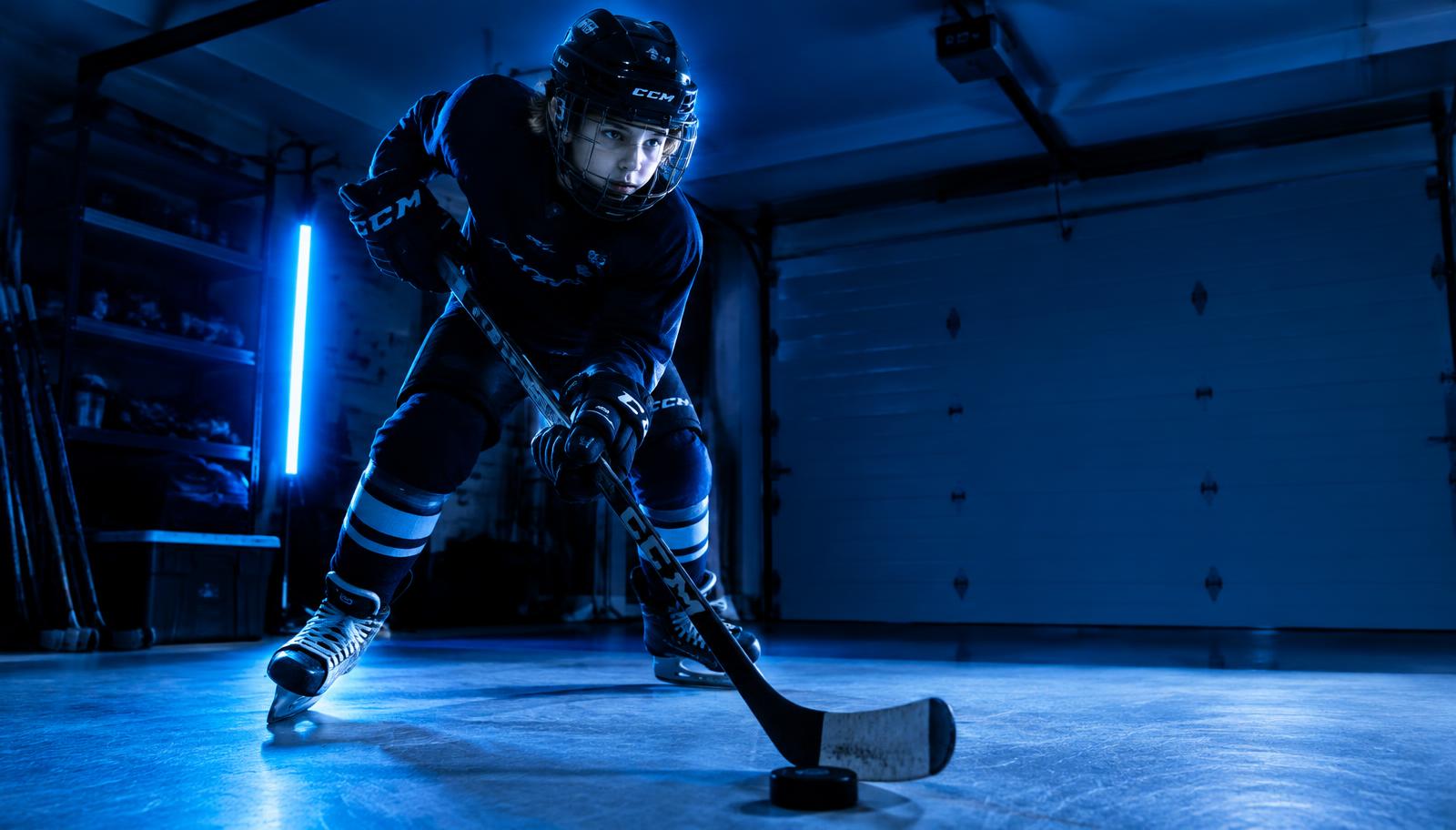
Off-ice stickhandling with a stickhandling ball or puck on a smooth floor for 10 to 15 minutes a day builds hands faster than most on-ice time alone. Start with basic toe drags and figure eights, then add speed and a tennis ball toss as skills improve.
01
What you need to get started
A stickhandling ball (a weighted, textured ball made for this) or an old puck, a stick, and a smooth hard floor, garage, basement, or driveway, are all you need. A shooting or stickhandling pad, a smooth plastic surface that mimics ice, makes the puck glide more realistically but is not required to start.
Ten to fifteen minutes a day is enough to see real improvement over a season. This is one of the easiest habits to build because it requires no ice time, no driving, and can happen while watching TV or between homework and dinner.
02
Foundational drills for beginners
Start with the basics before adding speed. Toe drags: pull the puck from the forehand to backhand using just the toe of the blade, 3 sets of 10 each direction. Figure eights around the feet: 2 minutes continuous, focusing on soft hands and keeping the head up.
Forehand to backhand sweeps: wide, controlled sweeps across the body, 3 sets of 15. Stationary puck control: simply cradling the puck in place, feeling the balance point on the blade, 1 minute per side.
- Toe drags: 3 sets of 10 each direction
- Figure eights: 2 minutes continuous
- Forehand to backhand sweeps: 3 sets of 15
- Stationary puck cradling: 1 minute per side
03
Progressions for intermediate players
Once the basics feel natural, add movement and speed. Walk while stickhandling in a figure eight pattern the length of a driveway or garage, 4 to 6 passes. One-touch quick hands drill: small, fast taps side to side for 30 seconds, rest 30 seconds, repeat 5 times.
Add a tennis ball toss against a wall: catch it with the free hand while stickhandling with the other, forces the head up and builds true game awareness. This is one of the best drills for players who tend to watch the puck too much during games.
04
Age-specific notes
Ages 6 to 8: keep it playful, 5 to 10 minutes, focused on just moving the puck around cones or shoes without much structure. Turning it into a simple game, like weaving through a line of stuffed animals, keeps engagement high.
Ages 9 to 12: 10 to 15 minutes with a mix of the foundational drills and simple progressions works well, and kids can start tracking their own reps. Ages 13 and up: 15 to 20 minutes including speed and game-realistic drills like the tennis ball toss, ideally most days of the week during the season.
05
Mistakes to avoid
Avoid stickhandling too fast before the fundamentals are solid, speed without control just grooves sloppy habits. Watch for kids looking down at the puck constantly, the tennis ball toss drill specifically fixes this and is worth prioritizing once basics are down.
Do not skip rest between hard drilling stretches within a session, tired hands lead to poor form. And avoid an inconsistent surface, a bumpy garage floor or thick carpet changes puck behavior enough to build the wrong feel.
06
Making stickhandling a daily habit
The players who develop the best hands are almost always the ones who stickhandle daily, in small doses, for years, not the ones who do occasional long sessions. A stick by the door or in the garage removes the friction of getting started.
In the Work Creates the Reward app, parents can set daily stickhandling as an approved work item, and kids earn points for logging their sessions, regardless of how a game or practice scrimmage went. That keeps the habit tied to consistent effort, which is exactly what builds real hands over a season.
Try this week
- 1Set up a stickhandling spot at home with a puck or ball and a clear floor space.
- 2Run the four foundational drills for 10 minutes, 5 days this week.
- 3Add the tennis ball toss drill once basic control feels comfortable.
- 4Log each session and celebrate consistency, not just skill gains.
Sample weekly point plan
Points for the work your child controls. Wins, stats and roster spots are what that work creates.
Up to 18 pts a week
| Work | When | Points |
|---|---|---|
| Complete 10 to 15 minute stickhandling session5x per week | 5x per week | 8 pts |
| Practice tennis ball toss drill3x per week | 3x per week | 5 pts |
| Track and note one new move learnedWeekly | Weekly | 3 pts |
| Keep stick and puck gear organizedWeekly | Weekly | 2 pts |
Parent questions
How long should off-ice stickhandling sessions be?
Ten to fifteen minutes a day is plenty for most kids and easier to sustain than longer, less frequent sessions.
Do I need a special stickhandling ball or can we use a puck?
Either works. A textured stickhandling ball behaves a bit more like a puck on ice and is lightweight, but an old puck on a smooth floor is a fine substitute.
What surface is best for off-ice stickhandling?
A smooth, hard floor like a garage, basement, or driveway works well. A dedicated shooting or stickhandling pad gives the most realistic glide if you want to invest in one.
My child gets bored with stickhandling drills, what can I do?
Turn drills into games, weaving through objects, racing a timer, or adding music can keep it engaging, especially for younger kids.
Work Creates the Reward
Turn this plan into a habit your child owns.
Your child logs the reps, prep and recovery they finish. You approve it in seconds. Points build toward rewards your family chooses. See how it works or compare membership plans.
Start Your 14-Day Trial