Quick answer
Young athletes generally do best with regular balanced meals, a pre-game meal eaten two to three hours before activity, and simple hydration habits throughout the day, not special diets. Talk with your child's pediatrician or a sports dietitian for any specific concerns, allergies, or performance questions.
01
Start with regular meals, not special diets
Most young athletes do not need a special sports diet. They need consistent, balanced meals: some protein, some carbohydrate, some fat, and vegetables or fruit, eaten at regular times through the day. Skipping meals to 'save room' or grabbing only snacks between activities tends to hurt energy and focus far more than any specific food choice helps.
If your child has a medical condition, food allergy, or a specific performance or growth concern, talk with your pediatrician or a registered sports dietitian rather than relying on general advice, including this article.
03
Hydration is a daily habit, not a game day fix
Kids who show up to a game already dehydrated from a day of forgetting to drink water cannot fix that in the twenty minutes before kickoff. Build water into the whole day: with breakfast, in the car, at school, not just at the field.
For most young athletes in typical conditions, water is enough. Sports drinks can have a place during long, hot, or multi-game tournament days, but talk with your pediatrician or athletic trainer about what fits your child's specific situation.
04
Packing food for tournament weekends
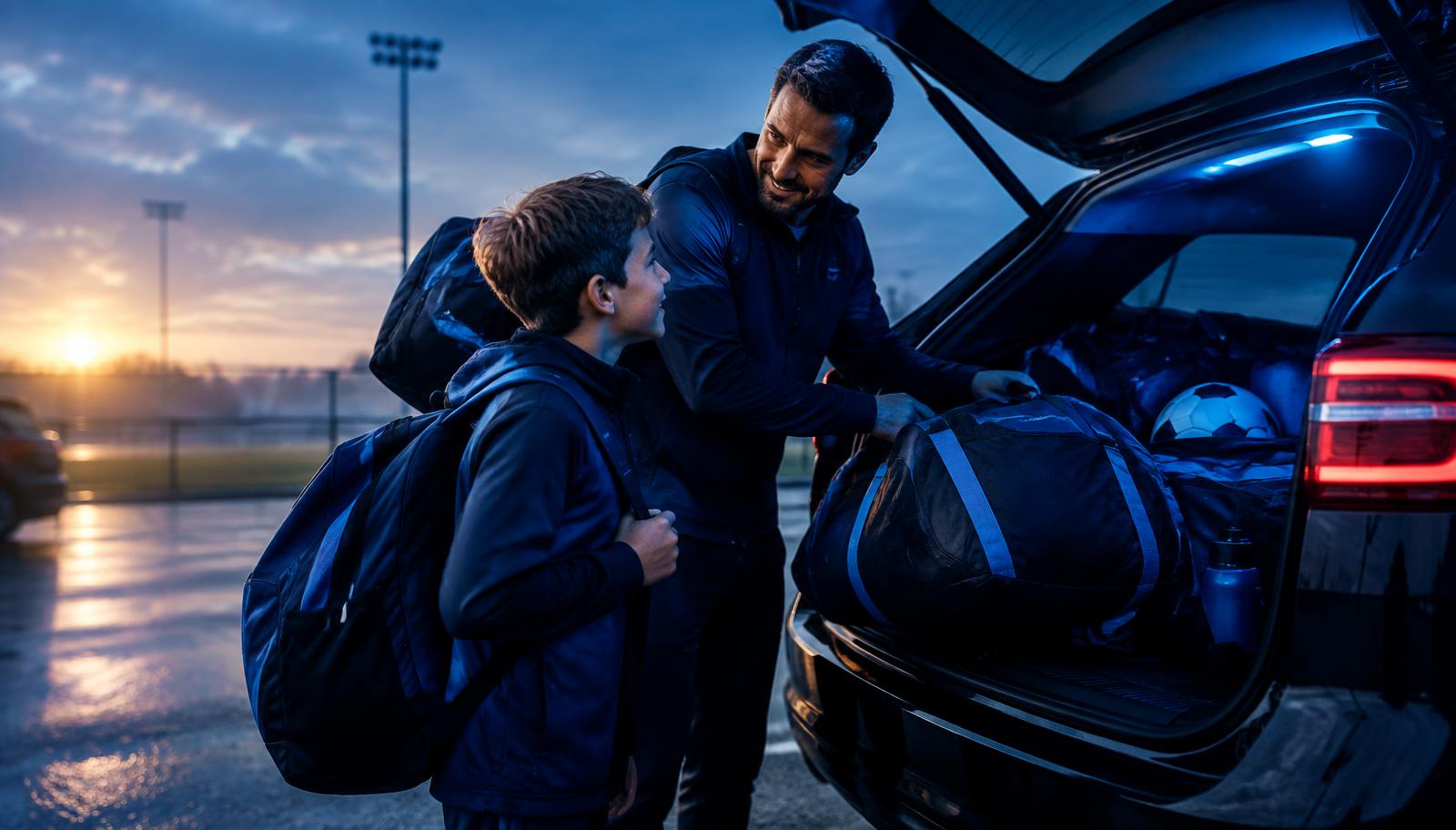
Tournament days often mean hours between games with limited food options at the venue. Packing a cooler with familiar, easy foods, fruit, sandwiches, crackers, cut vegetables, water, saves money and keeps your child eating on a schedule that actually supports their energy.
Avoid relying entirely on concession stand food for a full tournament day. It is fine occasionally, but it rarely provides the steady fuel a child needs across multiple games.
05
After the game: recovery matters too
A meal or snack with some protein and carbohydrate within a couple of hours after a game or hard practice supports recovery. This does not need to be complicated, a sandwich, yogurt with fruit, or a simple home meal all work.
This is also a good moment to build a small habit your child owns: refilling their water bottle, having a recovery snack ready, or doing a short stretch. Habits like this are exactly the kind of controllable work that fits into a family point system, since they are entirely within a child's control regardless of how the game went.
06
Watch for warning signs, and involve a professional
Rapid weight loss or gain, persistent fatigue, an unusual relationship with food, or a child skipping meals to control weight for a sport are signs to involve your pediatrician promptly rather than trying to manage at home. These situations deserve professional guidance, not general nutrition tips.
Trust your instincts as a parent. If something about your child's eating or energy around sports feels off, a conversation with their doctor is always a reasonable next step.
Try this week
- 1Plan and test one pre-game meal your child likes, eaten two to three hours before activity.
- 2Pack a tournament day cooler with familiar, easy foods.
- 3Build a water bottle refill habit into the daily routine, not just game days.
- 4Talk with your pediatrician if you have any specific nutrition or growth concerns.
Sample weekly point plan
Points for the work your child controls. Wins, stats and roster spots are what that work creates.
Up to 25 pts a week
| Work | When | Points |
|---|---|---|
| Refills and brings own water bottle without remindersDaily | Daily | 5 pts |
| Eats pre-game meal on the recommended scheduleEach game day | Each game day | 5 pts |
| Packs own snacks for a tournament dayEach tournament | Each tournament | 10 pts |
| Completes a simple post-game recovery snack and stretchAfter each game | After each game | 5 pts |
Parent questions
Do young athletes need protein shakes or supplements?
Most young athletes get what they need from regular food. Talk with a pediatrician or sports dietitian before adding any supplement, since needs vary by child.
What should my child eat the morning of an early tournament?
A familiar, balanced breakfast eaten as early as the schedule allows, with a light snack closer to game time if there is a gap of several hours.
Are sports drinks necessary for kids?
For most single games in normal conditions, water is enough. For long, hot, multi-game days, ask your pediatrician or athletic trainer what makes sense for your child.
My child says they feel sick before every game. Is that normal?
Some pre-game nerves affecting appetite are common, but persistent stomach issues deserve a conversation with your pediatrician to rule out other causes.
Work Creates the Reward
Turn this plan into a habit your child owns.
Your child logs the reps, prep and recovery they finish. You approve it in seconds. Points build toward rewards your family chooses. See how it works or compare membership plans.
Start Your 14-Day Trial