Quick answer
Start with free play and multiple sports around ages 4 to 6, keep the first seasons low pressure and short, and let your child's interest lead the pace. Structure and specialization can come later, once they show a clear pull toward a game.
01
Start with movement, not a sport
Before your child ever puts on a uniform, the goal is simple: get them moving, catching, running, balancing and falling down laughing. Backyard games, park trips, obstacle courses in the living room and family bike rides build the coordination that every sport later depends on.
Kids who arrive at their first organized season already comfortable moving their bodies tend to enjoy it more, because they are not fighting the basics and the game itself at the same time.
02
Pick the first sport based on temperament, not trend
Some kids thrive in team chaos like soccer or basketball, where the ball is always moving and there is always something to react to. Others do better in a sport with more individual structure, like swimming, gymnastics or tennis, where the pressure of teammates watching is lower.
Watch how your child plays at recess or in the backyard. A child who loves being in the middle of the action usually enjoys team sports early. A child who gets overwhelmed by crowds or noise may enjoy an individual sport first and add team sports once they are more confident.
- Try a rec league season, not a club team, for the first exposure
- Ask if the league guarantees playing time at this age
- Pick a season that is 6 to 8 weeks, not a full school year
- Let your child choose between two or three options you have vetted
03
Keep the first season low stakes
The first season is not about developing a skill set. It is about learning whether your child likes wearing a jersey, listening to a coach, and being part of a team. Keep practices short, keep your commentary light, and resist the urge to sign up for extra lessons before the first season even ends.
If your child cries before the first few practices, that is common and usually passes. If it continues after a month and the tears are about dread rather than nerves, it is worth stepping back and trying again in six months rather than pushing through.
04
What to say (and not say) on the sidelines
At this age, your job is to be the person they look for in the crowd, not the person coaching from the fence. A simple wave and a smile after every play, good or bad, tells them you are there no matter what happens.
Save the technical feedback entirely. A 5 year old does not need to hear 'you should have passed' on the ride home. They need to hear that you loved watching them play.
05
Build the habit of controllable effort early
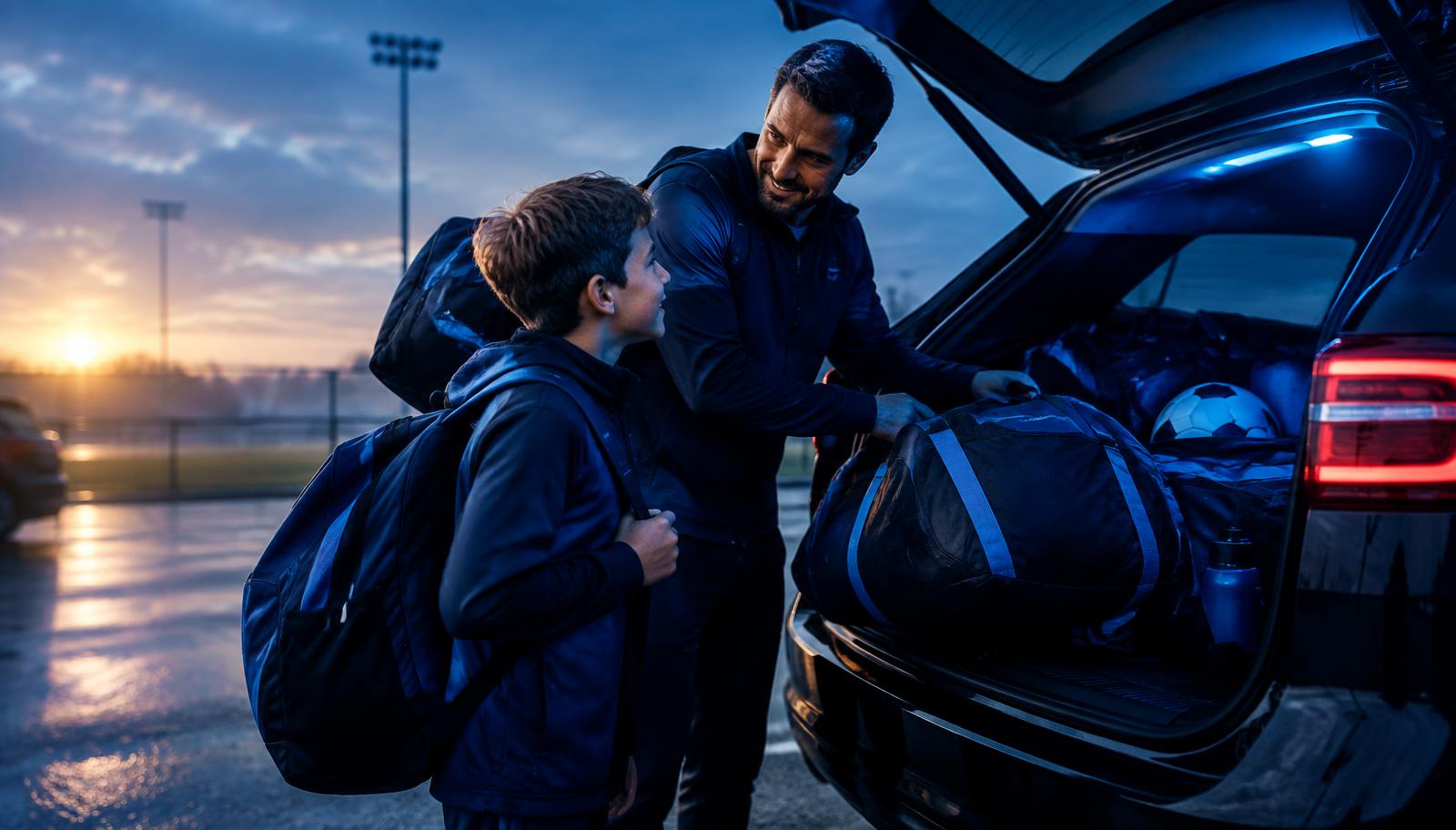
Even at this age, you can start rewarding things your child controls: showing up with their gear packed, listening to the coach, trying a new drill, or practicing for ten minutes in the yard. In our app, families set up small point rewards for exactly this kind of effort, not for goals scored or games won, so the habit of working hard becomes the identity, not the scoreboard.
This early pattern matters more than any specific sport skill. A child who learns that effort itself is noticed and appreciated carries that into every season that follows.
Try this week
- 1Play three different backyard games with your child and notice which one they ask to repeat
- 2Sign up for one low commitment rec season, not a club tryout
- 3Practice sideline silence: cheer only, no coaching, for one full game
- 4Ask your child after practice what was fun, not what they did well
Sample weekly point plan
Points for the work your child controls. Wins, stats and roster spots are what that work creates.
Up to 18 pts a week
| Work | When | Points |
|---|---|---|
| Pack own bag before practiceeach practice day | each practice day | 5 pts |
| Try a new drill without complainingeach practice | each practice | 5 pts |
| 10 minutes of backyard playdaily | daily | 3 pts |
| Listen to coach the first time askedeach practice | each practice | 5 pts |
Parent questions
What age should kids start organized sports?
Most kids are ready for simple rec sports around age 4 to 6. Before that, free play and movement matter more than any organized program.
Should I let my child quit if they do not like the first sport?
Yes, especially at this age. Finding the wrong fit is normal and part of the process. Try a different sport rather than forcing the same one.
Do young kids need private lessons?
No. At this age, repetition through play and a fun rec season teaches more than private instruction, and it keeps cost and pressure low.
Work Creates the Reward
Turn this plan into a habit your child owns.
Your child logs the reps, prep and recovery they finish. You approve it in seconds. Points build toward rewards your family chooses. See how it works or compare membership plans.
Start Your 14-Day Trial