Quick answer
A solid home plan mixes 15 to 20 minutes of tee or soft toss hitting three times a week with a structured throwing program on alternating days, plus arm care built into every throwing session. Keep sessions short, focused and consistent rather than long and occasional.
01
The weekly structure
Aim for three hitting sessions and three throwing sessions per week, on alternating or overlapping days, with at least one full rest day for the arm. A simple pattern: Monday hitting, Tuesday throwing, Wednesday hitting, Thursday throwing, Friday hitting, Saturday game or scrimmage, Sunday off.
Sessions should be short and focused, 15 to 25 minutes depending on age, rather than long marathon cage visits. Quality reps with full attention beat an hour of tired, sloppy swings.
02
Hitting drills that work in a backyard or garage
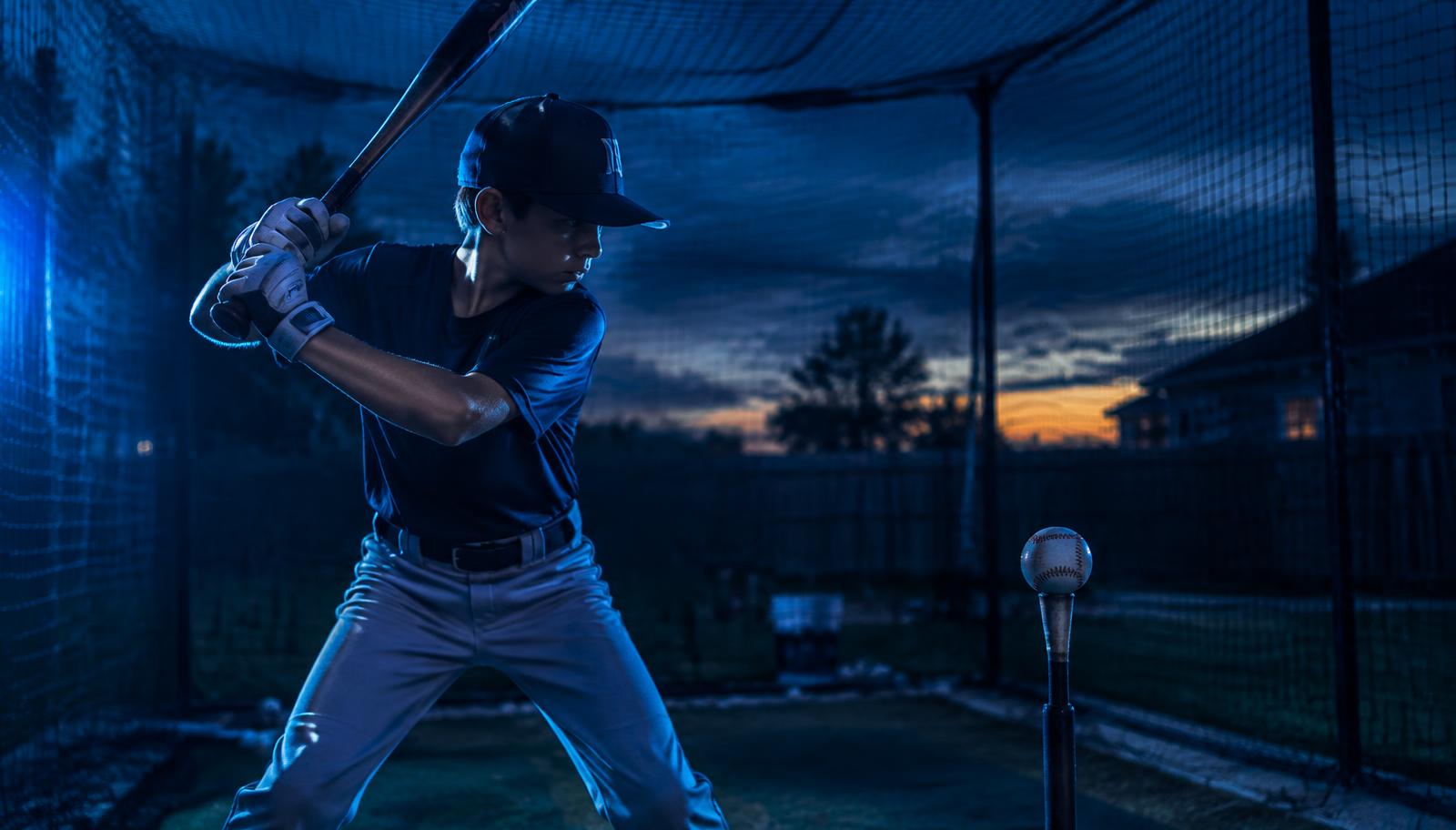
Tee work: 3 sets of 10 swings, one set focused on inside pitch location, one middle, one outside. Cue the child to finish each swing and check their balance rather than just making contact.
Soft toss: a parent or sibling flips 15 to 20 balls from the side into a net, focusing on hip rotation and staying inside the ball. This is the best drill for timing when a live pitcher is not available.
One-hand top-hand or bottom-hand isolation swings, 10 reps each, to build bat path awareness without a full swing's other variables interfering.
- Tee work: 3x10 swings across three locations
- Soft toss: 15 to 20 reps focused on timing
- One-hand isolation swings: 10 reps per hand
- Finish with 10 full-effort swings tracking contact quality, not just power
03
Throwing program and long toss
Start every throwing session with a dynamic arm warmup: arm circles, band work if available, and short-distance easy tosses for 5 minutes before stretching out the distance.
For ages 9 to 12, a simple long toss progression: 10 throws at 30 feet, 10 at 60 feet, 10 at 90 feet, then 15 throws back down to 60 feet with intent on accuracy. For 13 and up, distances can extend further based on arm strength and coach guidance.
Finish every session with a specific accuracy drill: throwing at a target, like a bucket or a taped square on a wall, for 10 to 15 throws, to build command instead of just arm strength.
04
Age-specific adjustments
Ages 7 to 9: keep sessions to 15 minutes, use a tee almost exclusively, and prioritize fun and form over reps. Throwing distances should stay short, and total throw counts low.
Ages 10 to 12: introduce soft toss and light long toss, start tracking simple pitch counts if they pitch, and begin teaching the mental side of a session, like setting one focus per set of swings.
Ages 13 and up: players can handle more volume and should start owning their own warmup routine, but arm care and rest days become even more important as velocity increases.
05
Making home practice stick
The biggest obstacle to a home plan is not knowing the drills, it is consistency once the season gets busy. Put the plan on a whiteboard or shared family calendar so it is not something you have to remember and nag about each day.
Inside Work Creates the Reward, families set up points for each completed hitting or throwing session, approved by a parent, that build toward a reward the child picked. This turns the plan from a chore into something the child tracks and wants to complete on their own.
Try this week
- 1Set a fixed hitting and throwing schedule on the family calendar for the next seven days
- 2Buy or set up one simple target for throwing accuracy work, like a bucket or taped wall square
- 3Run one full session together and film it on a phone to review swing or arm slot
- 4Ask your child to pick one specific focus for each hitting session this week
Sample weekly point plan
Points for the work your child controls. Wins, stats and roster spots are what that work creates.
Up to 30 pts a week
| Work | When | Points |
|---|---|---|
| Complete tee or soft toss session3x per week | 3x per week | 10 pts |
| Complete throwing program including warmup3x per week | 3x per week | 10 pts |
| Sets one specific focus before each sessioneach session | each session | 5 pts |
| Reviews video of one swing or throw with a parentweekly | weekly | 5 pts |
Parent questions
How long should a young hitter practice at home each day?
15 to 25 minutes of focused work is plenty for most youth players. Longer sessions often lead to fatigue and sloppy mechanics rather than better learning.
Do we need a batting cage at home?
No. A tee, a net, and a small backyard or garage space are enough for tee work and soft toss, which cover most of what a young hitter needs.
How often should a kid throw if they also pitch in games?
Follow your league's pitch count rules closely and build in extra rest days after pitching outings. Throwing programs on non-pitching days should stay light to protect the arm.
Work Creates the Reward
Turn this plan into a habit your child owns.
Your child logs the reps, prep and recovery they finish. You approve it in seconds. Points build toward rewards your family chooses. See how it works or compare membership plans.
Start Your 14-Day Trial